
Why Context Engineering Crushes Prompting in Smarter AI Era!
Discover how context engineering unlocks AI's full potential over prompting

The rapid evolution of artificial intelligence (AI) has transformed how we interact with machines, enabling them to understand and generate human-like text, solve complex problems, and even mimic creative processes.
At the heart of this transformation lies the way we communicate with AI systems. Traditionally, prompting, crafting specific instructions or questions to elicit desired responses has been the primary method for guiding AI behavior.
However, as AI models grow increasingly sophisticated, a new paradigm is emerging: context engineering.
This approach focuses on designing and structuring the broader context in which AI operates, rather than relying solely on isolated prompts.
In this article, we explore why context engineering surpasses prompting in the age of smarter AI, delving into its principles, advantages, and practical applications.
Understanding Prompting and Its Limitations
Prompting involves providing an AI model with a specific input, typically a question or command, to generate a desired output. For example, asking an AI, "Write a 500-word essay on climate change" is a straightforward prompt.
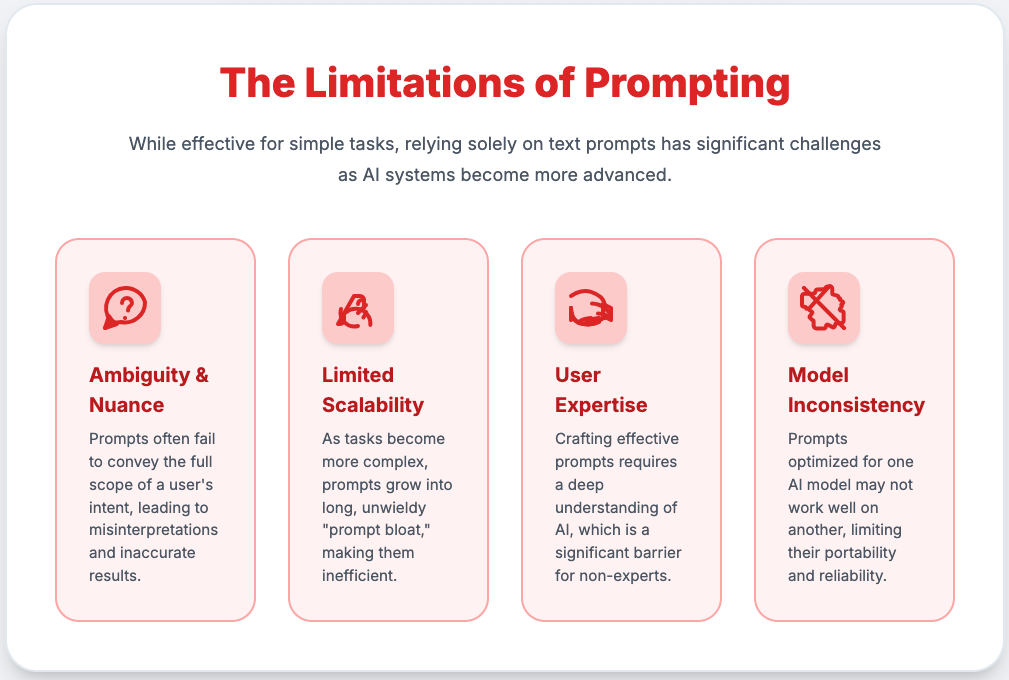
While effective for simple tasks, prompting has significant limitations as AI systems become more advanced.
1. Ambiguity and Lack of Specificity
Prompts are often inherently ambiguous. A single prompt may not convey the full scope of the user's intent, leading to misinterpretations. For instance, the prompt "Summarize this article" might yield a response that misses key nuances if the AI lacks context about the article's tone, audience, or purpose.
2. Limited Scalability
As tasks grow more complex, prompts must become increasingly detailed to achieve accurate results.
This can lead to "prompt bloat," where users craft long, unwieldy instructions to account for every possible variable. Such an approach is inefficient and impractical for large-scale or dynamic applications.
3. Dependency on User Expertise
Effective prompting requires users to understand how AI models interpret language. Crafting high-quality prompts often demands trial and error, making it inaccessible for non-expert users.
Moreover, even well-crafted prompts may fail to leverage the full capabilities of advanced AI systems.
4. Inconsistency Across Models
Different AI models interpret prompts differently due to variations in training data and architecture. A prompt optimized for one model may perform poorly on another, limiting portability and reliability.

What is Context Engineering?
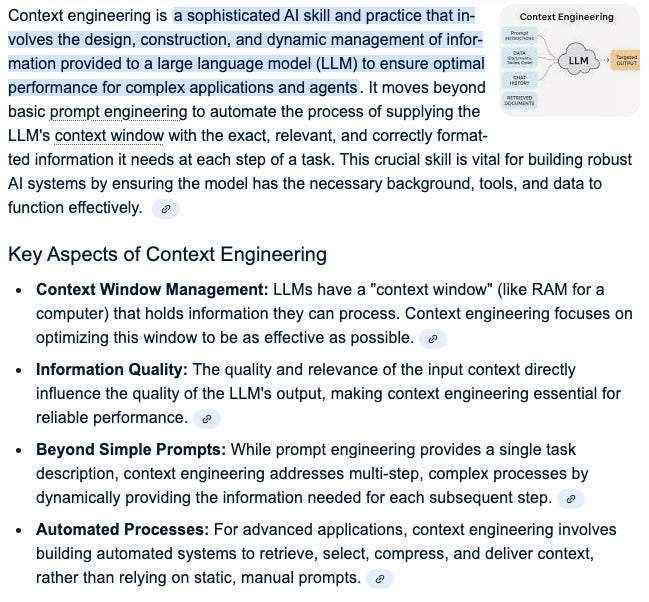
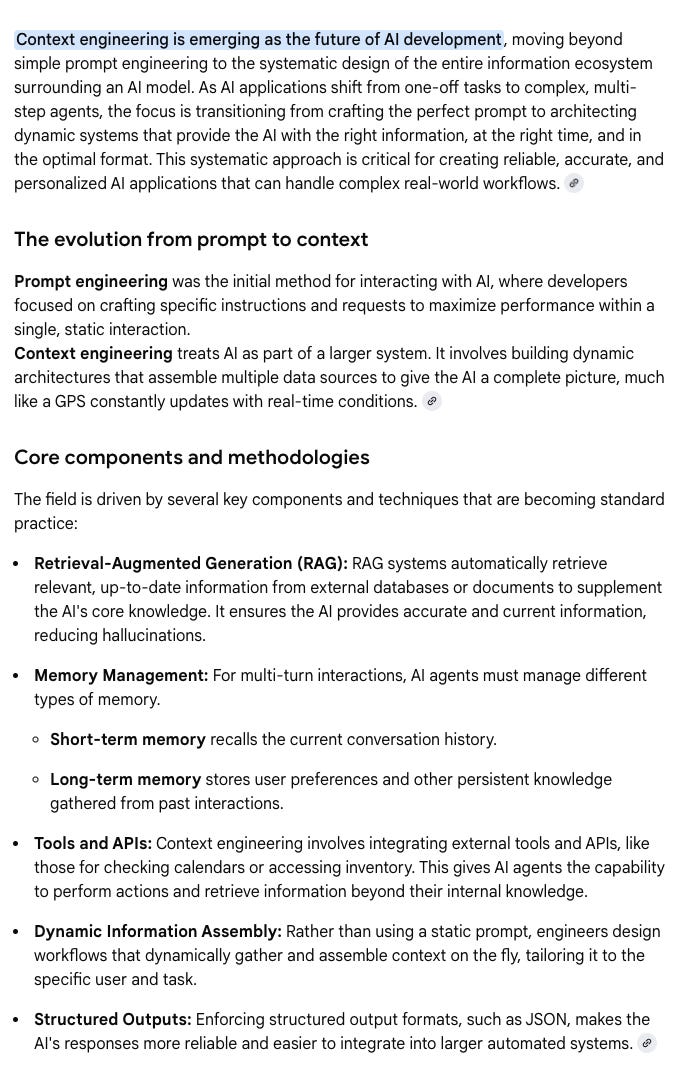
Context engineering is a holistic approach to interacting with AI that goes beyond individual prompts.
It involves designing the entire environment in which an AI operates, including the data, metadata, system constraints, and interaction frameworks.
Rather than relying on a single input, context engineering curates a rich, structured context that enables the AI to produce more accurate, relevant, and consistent outputs.
Key Components of Context Engineering
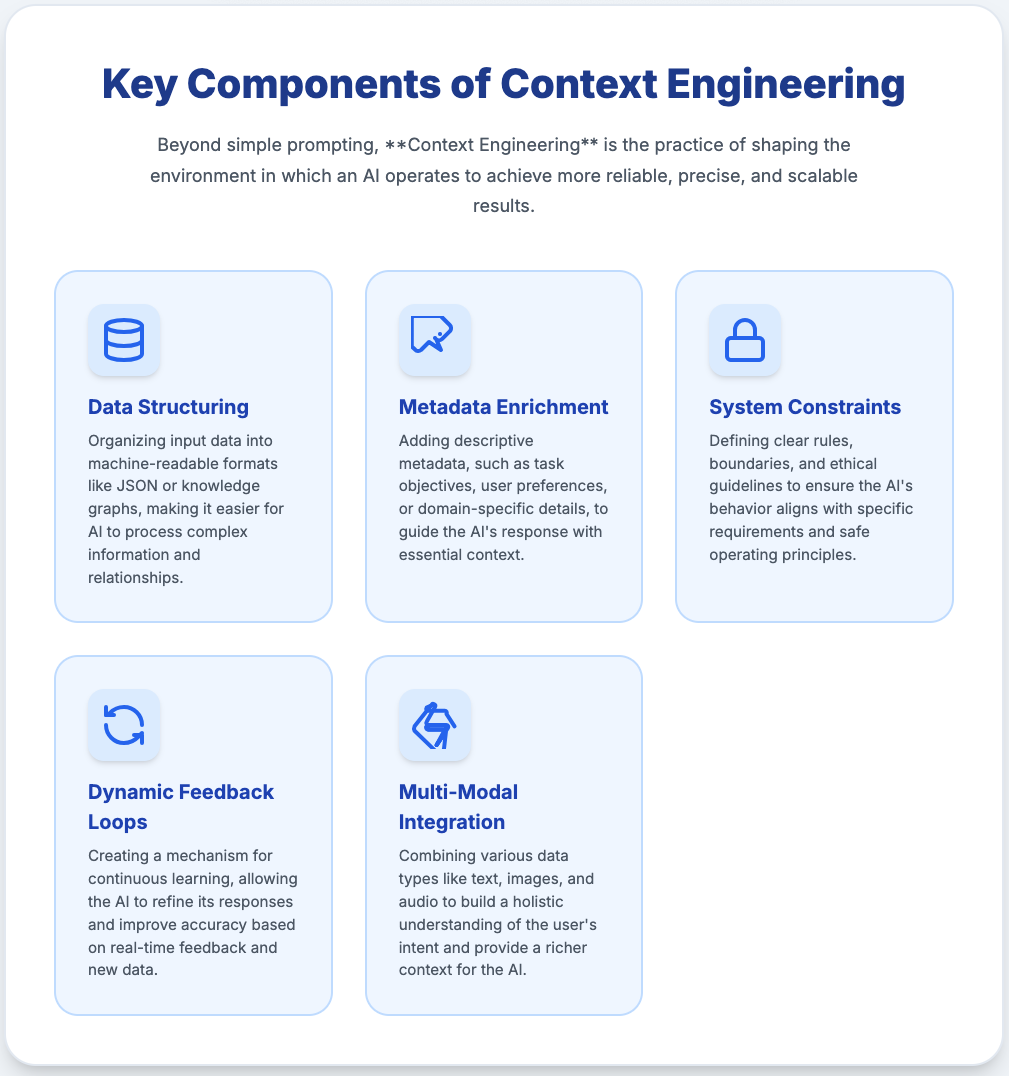
Data Structuring: Organizing input data into formats (e.g., JSON, knowledge graphs) that AI can easily process.
Metadata Enrichment: Adding contextual metadata, such as task objectives, user preferences, or domain-specific information, to guide the AI.
System Constraints: Defining rules, boundaries, or ethical guidelines that shape AI behavior.
Dynamic Feedback Loops: Incorporating mechanisms for real-time feedback to refine AI responses over time.
Multi-Modal Integration: Combining text, images, and other data types to create a comprehensive context.

Why Context Engineering Outperforms Prompting
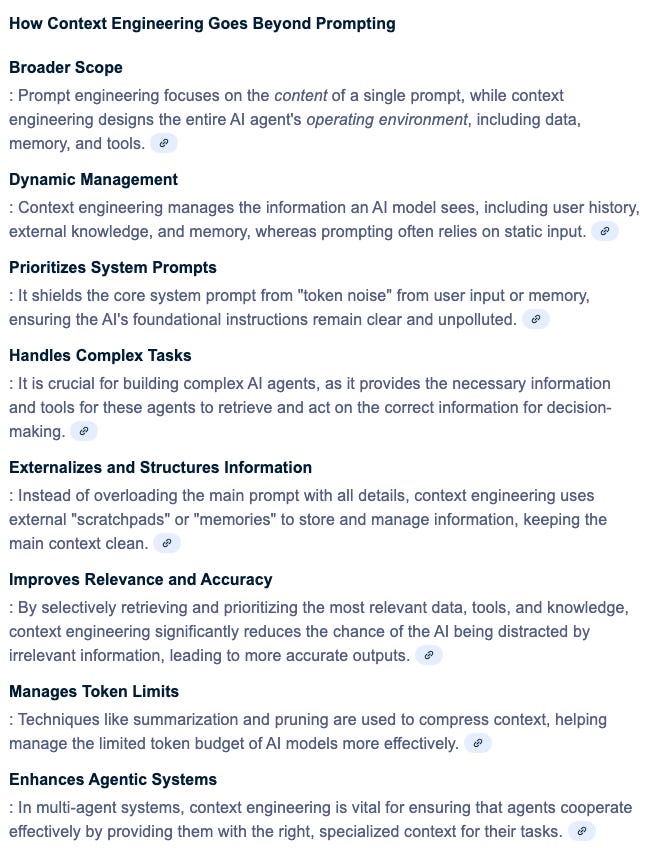
As AI systems like large language models (LLMs) become more intelligent, context engineering offers several advantages over traditional prompting. Below, we explore the key reasons why this approach is superior in the age of smarter AI.
1. Enhanced Understanding of Intent
Context engineering allows for a deeper understanding of user intent by providing a broader framework for interpretation.
For example, instead of a vague prompt like "Write a story about a hero," context engineering might include a structured dataset specifying the hero’s background, the story’s genre, and the intended emotional tone.
This reduces ambiguity and aligns the AI’s output more closely with the user’s vision.
2. Improved Consistency and Reliability
By embedding rules and constraints into the context, engineers can ensure consistent AI behavior across multiple interactions.
For instance, a customer service chatbot with a context-engineered framework can maintain a consistent tone, adhere to brand guidelines, and avoid inappropriate responses, even in varied scenarios.
Prompting alone struggles to achieve this level of reliability.
3. Scalability for Complex Tasks
Context engineering excels in handling complex, multi-step tasks. Consider a scenario where an AI is tasked with generating a business report.
A single prompt might struggle to capture the report’s structure, data sources, and formatting requirements. In contrast, context engineering can provide a structured template, reference datasets, and style guidelines, enabling the AI to produce a polished, professional output.
4. Adaptability to Diverse Use Cases
Unlike prompts, which are often task-specific, context engineering creates reusable frameworks that can be adapted across domains.
For example, a context-engineered system for medical diagnosis could include structured patient data, clinical guidelines, and ethical constraints, making it applicable to various medical scenarios without requiring new prompts for each case.
5. Leveraging Advanced AI Capabilities
Modern AI systems, such as those with multimodal capabilities, can process text, images, and structured data simultaneously.
Context engineering takes full advantage of these capabilities by integrating diverse data types into a cohesive framework.
For instance, an AI designing a marketing campaign could use a context that includes brand guidelines (text), sample visuals (images), and demographic data (structured datasets), resulting in a more comprehensive output than a text-only prompt could achieve.
6. Reducing User Burden
Context engineering shifts the burden of crafting precise instructions from the user to the system designer. By embedding domain knowledge and constraints into the context, non-expert users can interact with AI more intuitively.
For example, a context-engineered interface for a legal AI system might allow lawyers to input case details without needing to specify how the AI should analyze legal precedents.
7. Enabling Continuous Learning
Context engineering facilitates dynamic feedback loops, allowing AI systems to learn and improve over time.
For instance, a context-engineered chatbot can incorporate user feedback to refine its responses, ensuring better performance in future interactions. Prompting, by contrast, is static and lacks mechanisms for iterative improvement.

Practical Applications of Context Engineering
Context engineering is already transforming various industries by enabling AI to tackle complex, real-world problems. Below are some practical applications:
1. Healthcare
In healthcare, context engineering can integrate patient records, clinical guidelines, and real-time sensor data to assist doctors in diagnosis and treatment planning.
For example, a context-engineered AI system could analyze a patient’s medical history, lab results, and imaging data to recommend personalized treatment options, far surpassing the capabilities of prompt-based queries.
2. Customer Support
Context-engineered chatbots can access customer profiles, purchase histories, and interaction logs to provide personalized, context-aware responses.
This ensures a seamless customer experience, even in complex scenarios like troubleshooting or upselling.
3. Content Creation
For content creators, context engineering enables AI to generate tailored content by incorporating brand guidelines, audience demographics, and content goals.
For instance, a context-engineered system could produce a series of blog posts optimized for SEO, tone, and target audience, reducing the need for repetitive prompting.
4. Software Development
In coding, context engineering can provide AI with project specifications, codebases, and testing requirements, enabling it to generate or debug code more effectively.
For example, a context-engineered system could assist developers by suggesting code snippets that align with the project’s architecture and coding standards.
5. Education
Context-engineered AI tutors can adapt to individual learning styles by integrating student performance data, curriculum standards, and pedagogical strategies.
This creates a personalized learning experience that evolves with the student’s progress.
Challenges and Considerations
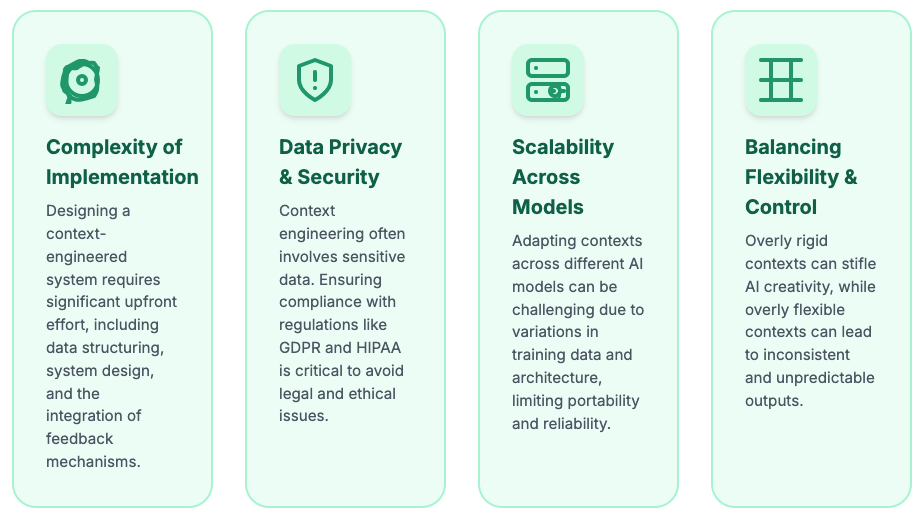
While context engineering offers significant advantages, it is not without challenges. Below are some key considerations:
1. Complexity of Implementation
Designing a context-engineered system requires significant upfront effort, including data structuring, system design, and integration of feedback mechanisms. This can be resource-intensive compared to simple prompting.
2. Data Privacy and Security
Context engineering often involves handling sensitive data, such as medical records or customer information.
Ensuring compliance with data privacy regulations (e.g., GDPR, HIPAA) is critical to avoid legal and ethical issues.
3. Scalability Across Models
While context engineering improves consistency within a single AI system, adapting contexts across different models or platforms can be challenging due to variations in architecture and capabilities.
4. Balancing Flexibility and Control
Overly rigid contexts may limit AI creativity, while overly flexible contexts may lead to inconsistent outputs. Striking the right balance is essential for maximizing the benefits of context engineering.
The Future of Context Engineering
As AI continues to advance, context engineering will play a pivotal role in unlocking its full potential. Future developments may include:
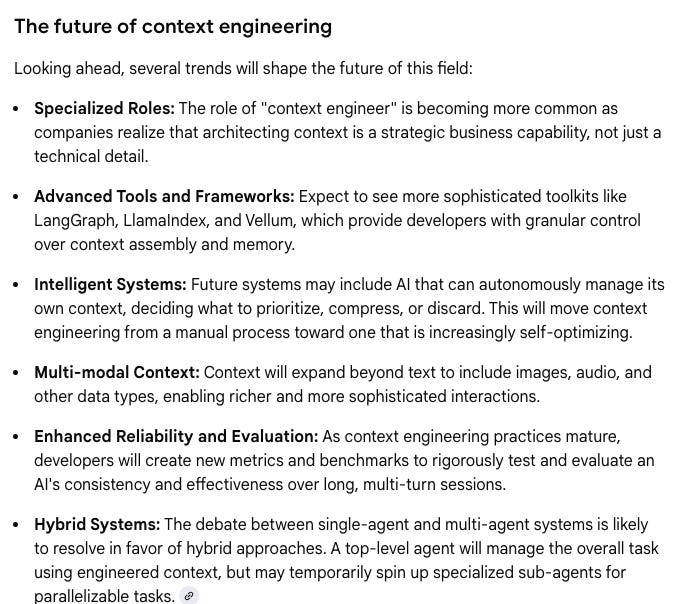
Automated Context Generation: AI systems that automatically generate and refine contexts based on user interactions, reducing the need for manual engineering.
Standardized Context Frameworks: Industry-wide standards for context engineering, enabling seamless integration across AI platforms.
Ethical Context Design: Incorporating ethical guidelines into contexts to ensure AI systems operate responsibly and transparently.
Multimodal Contexts: Leveraging advancements in multimodal AI to create richer, more dynamic contexts that integrate text, audio, video, and sensory data.

Conclusion
In the age of smarter AI, context engineering represents a paradigm shift from traditional prompting.
By providing a structured, comprehensive framework for AI interactions, context engineering overcomes the limitations of ambiguity, scalability, and inconsistency inherent in prompting.
Its ability to leverage advanced AI capabilities, reduce user burden, and enable continuous learning makes it a superior approach for complex, real-world applications.
As industries increasingly adopt AI-driven solutions, context engineering will be the cornerstone of building more intelligent, reliable, and user-friendly systems.
By embracing this approach, we can unlock the full potential of AI, paving the way for a future where machines understand and respond to human needs with unprecedented precision and insight.