
Increase Substack Reach with AI and Google SEO Tactics

SEO for Substack & Newsletter Platforms: Making Your Newsletter Archives Discoverable by Google and AI
In the digital age where content is abundant but attention is scarce, discoverability is everything. For newsletter creators using platforms like Substack, it's not enough to write valuable content — your audience needs to be able to find it. That’s where SEO (Search Engine Optimization) comes in, and in today’s AI-first world, it’s evolving rapidly to accommodate search engines and AI-driven platforms alike.
In this article, we’ll explore how you can optimize your Substack or newsletter archive for traditional SEO and AI-based discovery to boost visibility, traffic, and growth.
Why SEO Matters for Newsletters
While newsletters are often seen as private or direct-to-inbox content, platforms like Substack make your archives publicly accessible. This creates an opportunity to capture organic traffic from search engines. Optimizing your newsletter means your past content can continue to attract new readers long after it's sent.
Moreover, with AI-powered search interfaces like ChatGPT, Google’s Search Generative Experience (SGE), and others evolving rapidly, ensuring your content is AI-readable and recommendable becomes crucial.
1. Start with Keyword Research
Just like blogging, keyword research is the foundation of SEO for newsletters:
Use tools like Google Keyword Planner, Ubersuggest, Ahrefs, or even Google’s "People also ask" feature.
Identify keywords that your ideal readers are searching for.
Focus on long-tail keywords that match the intent of your content.
Include trending and evergreen topics within your niche.
Example: Instead of titling your post "Thoughts on Growth," go for "10 Growth Hacks for Digital Creators in 2025."
2. Optimize Titles and Meta Descriptions
Substack allows you to customize your post title and description, which show up in search results:
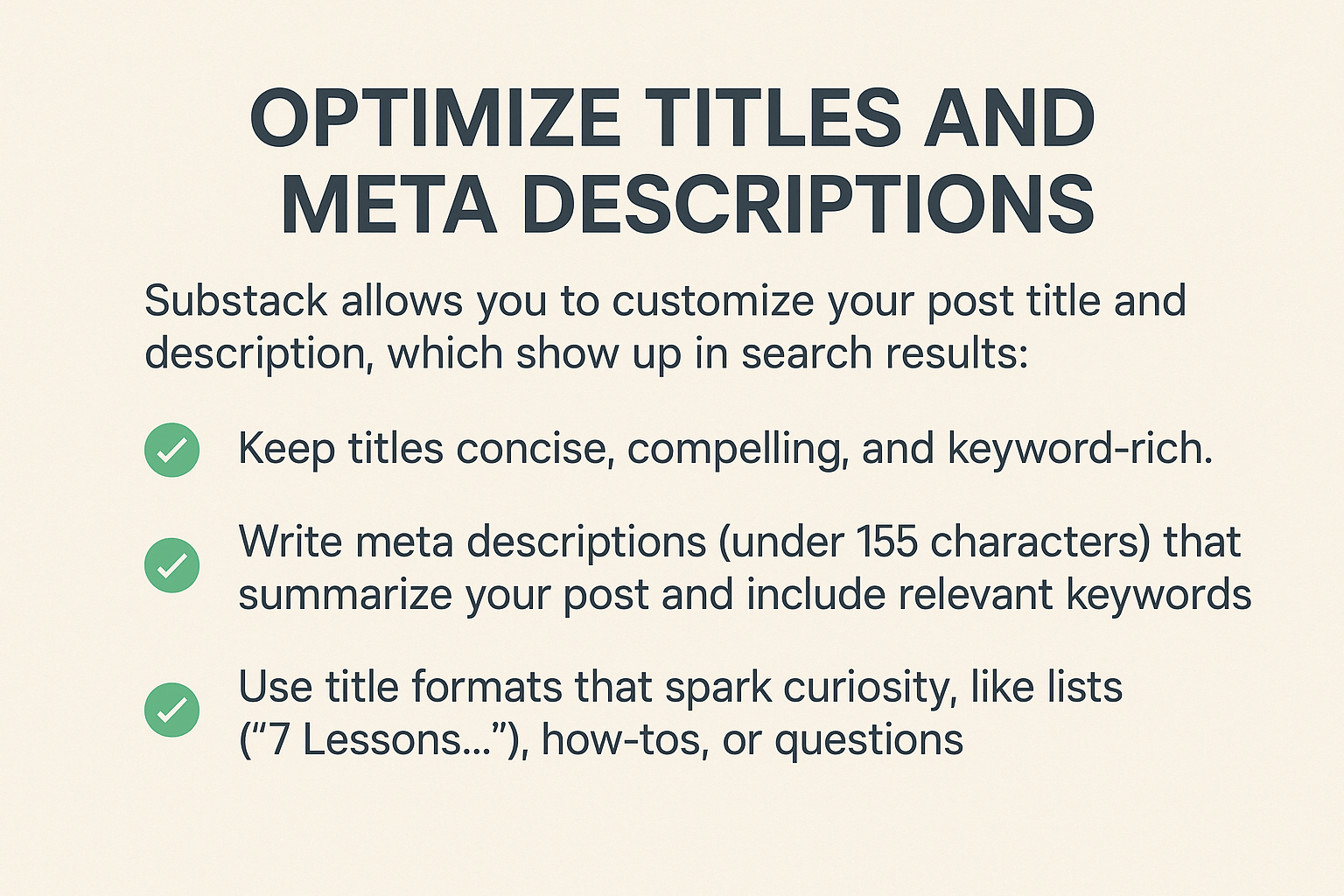
Keep titles concise, compelling, and keyword-rich.
Write meta descriptions (under 155 characters) that summarize your post and include relevant keywords.
Use title formats that spark curiosity, like lists ("7 Lessons..."), how-tos, or questions.
3. Structure Content for Readability and SEO
Google and AI bots prefer structured, scannable content:
Use headers (H2, H3) to break up long texts.
Bullet points and numbered lists improve readability.
Use short paragraphs (2–4 lines) for better mobile experience.
Include internal links to other newsletters or blog posts.
Add bold or italicized highlights for important takeaways.
4. Use Canonical Tags Wisely
If you cross-publish your newsletter (on Medium, LinkedIn, or a blog), use canonical tags to prevent duplicate content issues. Substack lets you set a canonical URL in the advanced settings.
Make sure your Substack version is the canonical if you want to prioritize its SEO performance.
5. Leverage Substack’s URL and Image Alt Text Features
Customize your newsletter URL slug to be clean and keyword-focused (e.g.,
/seo-tips-newslettersinstead of/p/2342-growth-thoughts).Add alt text to images with descriptive keywords. This not only aids SEO but also helps visually impaired readers.
6. Enable Google Indexing for Substack
Substack newsletters are public by default, but make sure your page is indexable:
Check your robots.txt and sitemap files (Substack handles these automatically).
Submit your Substack homepage to Google Search Console.
Submit each new newsletter manually or wait for Google to crawl.
7. Build Backlinks to Your Substack
Backlinks are votes of trust in the eyes of Google:
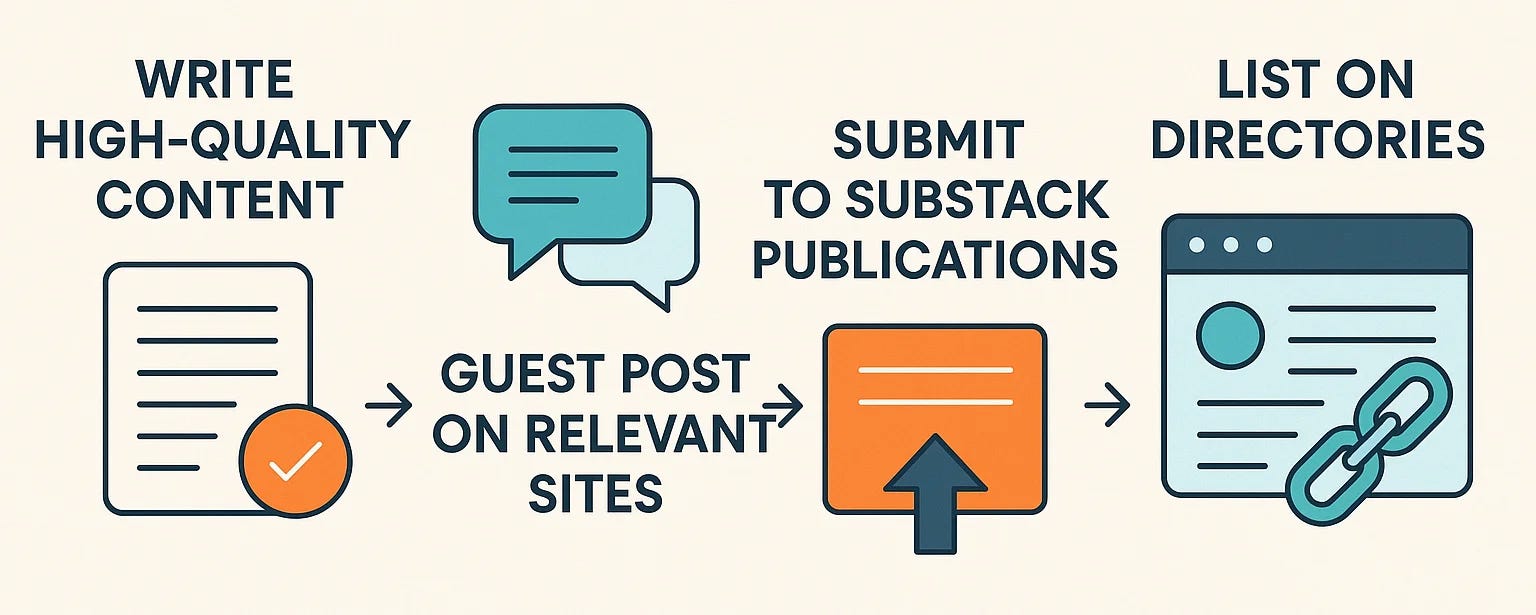
Share newsletter posts on your blog and social media.
Collaborate with other writers for cross-promotion.
Participate in forums, communities, and answer platforms like Quora or Reddit with links to relevant newsletters.
8. AI Optimization (AIO) — The Next Step
AI tools like ChatGPT, Perplexity, and Google’s SGE use different mechanisms to surface answers:
Structure content with clarity so AI can understand intent.
Use schema markup if embedding content on your site.
Use semantically rich language, synonyms, and context-based headers.
Clearly answer questions users might ask AI tools (e.g., “What is the best time to send a newsletter?”)
9. Use Analytics to Improve SEO Performance
Track what’s working:
Use Substack’s native analytics for open rate and reader engagement.
Set up Google Analytics if you integrate Substack with a custom domain.
Track keywords using tools like Ahrefs, Google Search Console, or Ubersuggest.
Update under performing posts with improved headlines, keywords, and structure.
10. Encourage Sharing and Engagement
The more your newsletter is shared, the more likely it is to earn backlinks and rank higher:
Add social sharing buttons to each issue.
Ask readers to forward the newsletter.
Embed call-to-actions (CTAs) like “Share this if it helped you.”
Bonus: Use AI Tools to Optimize Your Content
Don’t just write content manually — let AI help:
Use ChatGPT to find keywords, rewrite titles, or summarize.
Use Grammarly or Hemingway to improve readability.
Use Canva to create visuals that increase on-page time.
Conclusion: SEO Is a Long-Term Game
Whether you're building on Substack or any newsletter platform, SEO is not a quick win — it's a compounding strategy. With the rise of AI-driven discovery, the future of newsletter growth is a combination of traditional SEO and AIO (Artificial Intelligence Optimization).
To stay relevant, focus on what both humans and machines care about: clarity, consistency, and value.
So, is your newsletter optimized not just for readers — but for search engines and AI?
Now is the time to make it visible, searchable, and recommendable.